
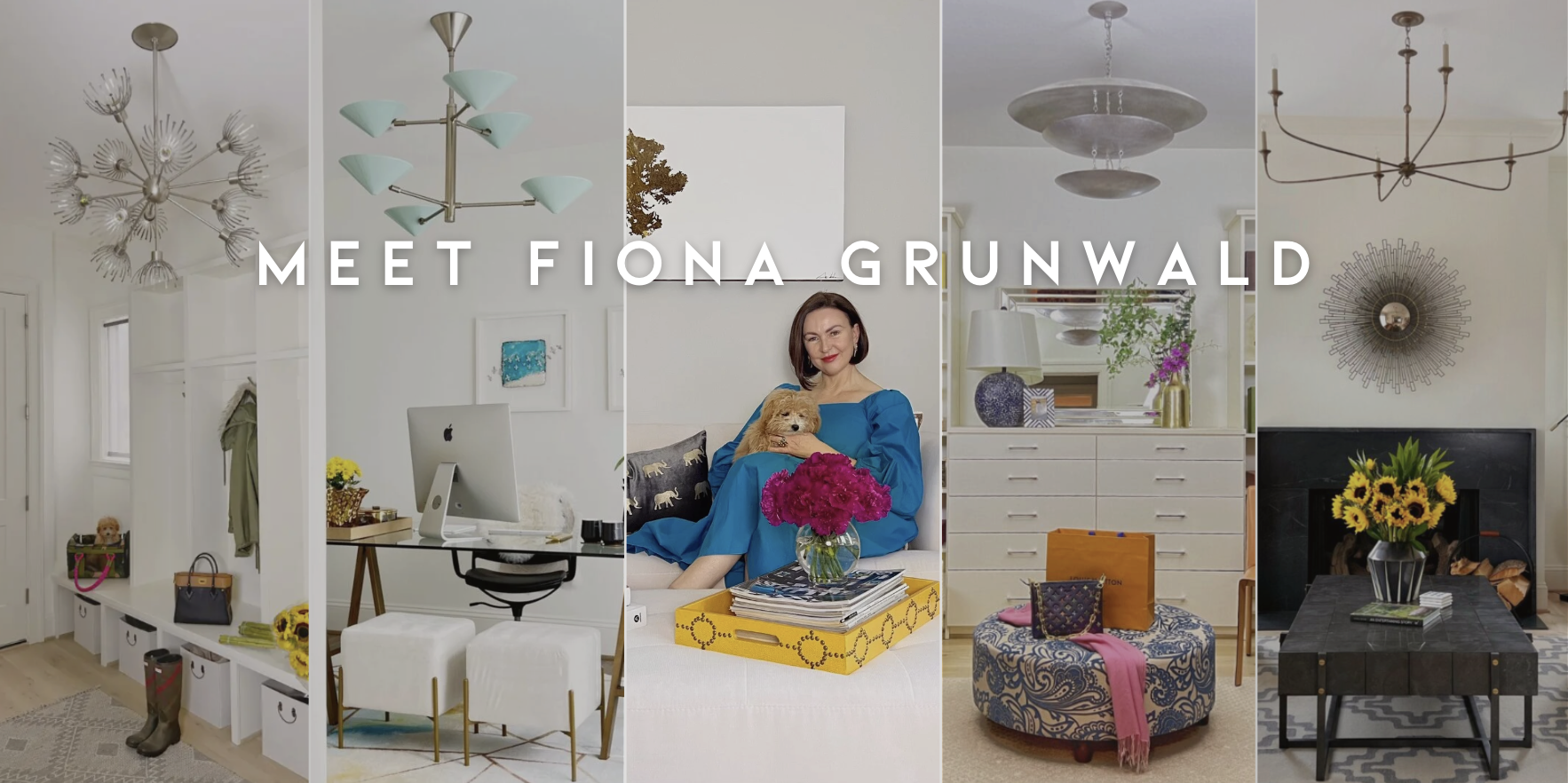
The Importance of Lighting in Interior Design
By Lindsay Field Penticuff
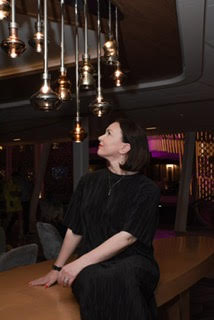 Fiona Grunwald credits her corporate life of traveling the globe as a human resources professional for helping shape her love and appreciation for light and design.
She was born and raised in Ireland, and after earning a degree in psychology from the University College Dublin had an opportunity to live all around the world in places like London, Sydney and Milan. Today, she lives in the Washington, D.C., area.
But her work is no longer in HR. It’s in interior design, a profession she somewhat came across by happenstance.
“I was sitting in my kitchen looking at three pendants hanging over my kitchen island,” Grunwald shares. “I’ve always loved interior design and beautiful spaces, but these pendants were really bugging me. I found myself not wanting to turn them on. I didn’t choose them, so they weren’t representative of my aesthetic.
 “I had designed pretty much everything else in the room and was looking at these three pendants, going, ‘They have to go!’ Once I changed them, the room was just transformed. It really made a massive difference. They just made the room beautiful. They were sparkly and beautiful, and they really elevated the space.
“Once I had done that one time, I was totally hooked, because I could see the power of how lighting can absolutely transform a space. That was a pivotal moment for me, and I haven’t looked back. I’ve always embraced lighting, and it’s the first thing I notice when I go into a room.”
That was more than 10 years ago. Today, Grunwald is founder of the residential interior lighting design firm Design by Conway in McLean, Virginia. She is also a certified Lighting Specialist with the American Lighting Association, RIDE-qualified by the Designer Society of America, a True Colour Expert and a graduate of the Science in Design Academy.
Learn more about Grunwald’s passion for lighting in the Q&A below:
When you are looking at lighting, are you looking at the aesthetics of the light itself or the type of light it’s bringing into a space?
“It’s really a combination of the aesthetics of the light, what it’s made up of (texture and materials, and type of light it gives off and the color temperature) and what it does to the space (What role and function does it play?)
“A chandelier, for example, might add beauty and light, and a particular recess figure is going to light up a piece of art or architectural detail that the builder has introduced and it’s just illuminating that space. Lighting is there to elevate and showcase a space.
“When I walk into somewhere, I’m looking at all of those pieces. Similar to a piece of jewelry, if you have a fabulous chandelier, if that’s attractive and beautiful and fits the space, that’s what is going to draw my eye and others’ eyes.”
With a background in psychology and corporate HR, what led you to transition into the world of interior lighting design? How do you integrate your diverse experiences into your approach to lighting design?
“I studied psychology in university, which led me into corporate HR, and I spent all my working time in corporate HR in different parts of the world. I started in Ireland, but I lived in different places, working with diverse, multicultural teams and dealing with very different types of businesses.
“I’ve been in very different working environments working with lots of different people. I feel like it’s a huge advantage. The human resources and psychology piece coming together in the design world has really been helpful for me. And I’m naturally curious, so asking questions and getting to the bottom of how people feel, how they want to feel, how they want to see their homes and how they want to live within their spaces is really part of what I love to do. It’s been a natural progression, and all that I’ve done up to now is helping me with what I’m doing now.
As a certified Residential Lighting Specialist and advocate for neuroaesthetics and biophilic design, how do you incorporate scientific principles into your lighting designs to enhance aesthetics and well-being?
“This taps into the whole psychology element—form follows feeling. This expression is such a key aspect of neuroaesthetics. It’s looking at beauty and the brain, and how we respond to our living environment. We know automatically when we walk into a space whether we feel happy or not. And before we are even consciously aware of what makes a space great or not, our bodies are giving us that feedback.
“All of our senses are incorporated in neuroaesthetics, and it’s giving us more data. The science is showing us that all these different elements are important for our health and well-being. There are so many elements of the outdoors that we are yearning for because we are spending so much time inside, so bringing those outdoor elements inside is really advantageous and makes us feel so much better.
“And, we don’t necessarily understand why, but we know when we see it, especially with biophilic design, such as with fractals in our designed space. It’s about using design elements intentionally that make us feel better.
“The science piece of it is saying that the home is the future of medicine, which is a big, bold statement, but it does make a huge difference if we design with the elements—especially if you take cultural and personal elements into perspective.”
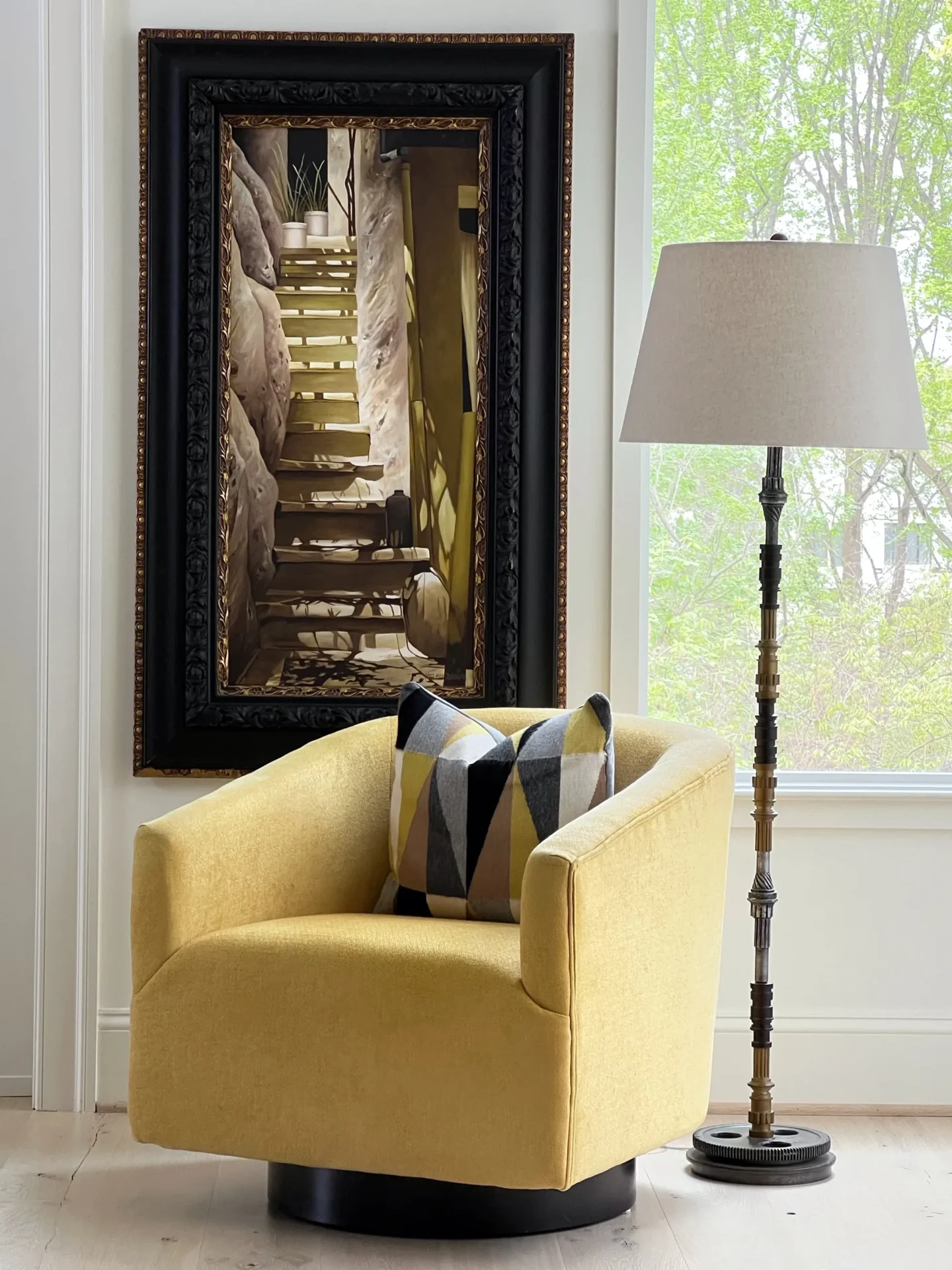 Design by Conway focuses on intentional lighting to positively impact health and happiness in the home. Can you elaborate on how intentional lighting design can create a sanctuary-like atmosphere and contribute to overall well-being? (help them understand the importance)
“Sometimes, it comes down to understanding how people will want to use their space and how they feel in that space, especially with home. They may not talk about it from a technical perspective—not telling you what Calvin to use—but they rely on a description of how they want a space to feel, which naturally translates into color temperature. Are they predisposed to something that is warmer and more yellow, or do they like something that is brighter and bluer? It’s about drawing information from the client as to what makes them feel more comfortable. That isn’t always something that people are readily able to share, so it’s a steppingstone and a conversation to get to the feeling that they are trying to achieve with their space.”
Click HERE for the rest of Fiona's interview and check out our Design Viewpoint!
To stay inspired by Fiona’s latest projects and lighting tips, be sure to follow her on Instagram at @designbyconway. Don’t miss out on the beautiful transformations she creates, bringing light and life into every space!